S4 | E4 | Ads, Ethics, and the Future of Revenue in GenAI Apps with Mike Choi @ Koah Labs
AI apps are exploding, but monetisation remains one of the biggest unanswered questions.
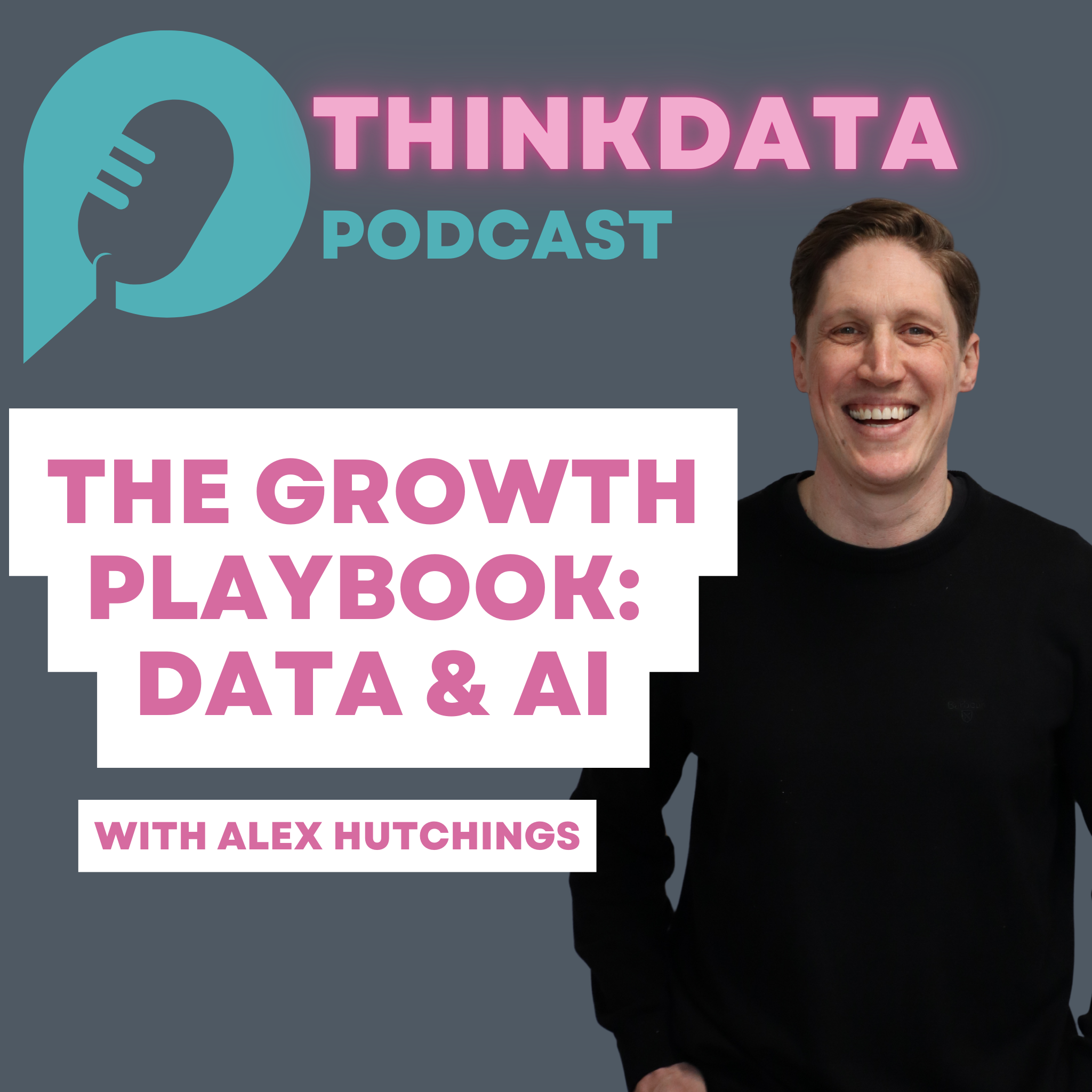
In this episode of the ThinkData Podcast, Mike Choi, Co-Founder of Koah Labs, shares how AI products can generate revenue without destroying user experience or trust.
We explore why classic ad models fail in chat-based interfaces, what it takes to convince AI builders and advertisers to adopt new monetisation approaches, and how advertising inside GenAI products will evolve over the next few years.
If you’re building, funding, or scaling an AI product, this episode is a must-listen.
🧠 Topics Covered
- Why most AI apps struggle to monetise sustainably
- The origin story behind Koah Labs
- Why traditional advertising breaks in chat-based products
- How to monetise AI without harming user experience
- Convincing AI founders and advertisers to embrace new models
- The future of advertising in GenAI over the next 2–3 years
- Ethics, privacy, and trust in AI-powered ad systems
Transcript
Welcome to the Think Data podcast brought to you in partnership with Mydataworks. If you want to stay up to date with the latest breakthroughs and trends in the world of data and artificial intelligence, and if you're curious about some of the strategies that companies and founders use to launch data and AI products, then you're in the right place. Our aim is to bring together a diverse lineup of fantastic guests from the founders, through to accomplished leaders and product owners at some of the most fascinating data and AI companies worldwide. They will each offer you their own unique insight into what it takes to launch and scale a great data business. Thanks for tuning in, and I hope you enjoy the episode. Welcome to the Think Data podcast and today's guest is Mike Choi. He is the co-founder of CoaLabs. Mike is a former software engineer and he's worked for, well, a lot of the big folk, Google, Apple and Twitter. But back in August 2024, he co-founded CoaLabs. They're a really interesting business because they're a startup that's helping AI apps earn revenue by placing really simple, relevant ads directly inside the chat experience. Obviously, as alluded to, Mike, you've got a wealth of experience, obviously, as a software engineer. But I suppose going from a hands-on coder, intern at Google, working at all the big guys, then launching your own company. What led you to have that moment where you saw an opportunity and decided to find color?
Mike Choi:Yeah. Well, first of all, thanks for having me on, Alex. Glad to be here. Pleasure. It's good to have you on. Yeah. I think this might be like a little story time. But. You know, you say I've been working at all those big companies. And I think ever since I, you know, had my first laptop, I was a builder. So I made a lot of apps. And I think the first app that I remember creating was actually back in high school or secondary school, as they might say in the UK, right?
Alex Hutchings:Yeah, that's it.
Mike Choi:And yeah, it was like a card game that I kind of saw from a late night Jimmy Fallon TV show.
Alex Hutchings:Okay.
Mike Choi:where It's a very silly game, but essentially what you do is you play with one person and then you get a random card with a random word on it. And your job is to sneak that word into the conversation without having it, you know, being detected essentially. So at the end of the conversation, the other person is supposed to guess, yeah, the secret word was mayonnaise, right? And then, you know, it's like a yes or no. And then if you don't guess it or if you guess it, you get a point, blah, blah, blah, right?
Alex Hutchings:Okay.
Mike Choi:So that was our first ever app. put it on the app store it was called word sneak and it got a couple downloads and you know high school me was thinking oh is there a way to make money off of this cool right and so of course as you would yeah and so i discovered this thing called ad mob and for those who've you know played flappy bird back in like 2010 or 2011 you'll know that ad mob basically powers those like 300 by 50 banner ads that you know, get displayed in the bottom of apps and developers get paid for it depending on the number of eyeballs or number of interactions they've been able to drive. And so I was like, okay, let's give it a shot. And then I implemented SDK using Stack Overflow for my guidance at the time, because there's no AI, right? And over a week, I think I made like $20, which was a huge amount of money for me at the time. And so I got that money, went to Starbucks and bought myself a... of Frappuccino. And I think that kind of unlocked the bit of... No change. That's right. Exactly. It's like, keep the change, right? I felt like the richest man in the world, right? And I think that essentially unlocked like a bit of... It was like an aha moment for little Mike. And I think that carried on, you know, when I started building apps as a Bootstrap founder back like two years ago. And that's when I first left Twitter to start, you know, trying my own things. And I made bunch of different consumer apps with my co-founder and we made i think about one to two consumer apps per month for about a span of all of an entire year wow and we were you know that was one of our strengths that we were really good builders and we're really good at building things fast to really validate or invalidate ideas but the problem that we kept running into was yeah you could build it you can get some distribution but it's really hard to monetize these apps, right? a lot of folks kind of resort to subscriptions and you know experimenting with paywalls and experimenting with pay schemas or subscription schemas to kind of you know try to maximize all the folks that download your app somehow and then tries the the try free trial for one week and hope that they forget to cancel their subscription and all that right yeah and we're like there has to be a better way. At the time, we were making a lot of apps using LLMs and, you know, the idea of putting banner ads, you know, a technology that was made in the early 2000s into an insanely powerful app with a very novel UX paradigm just didn't make too much sense to me. And so at the time, we actually put the idea into our backlog of many ideas because, frankly, you know, back in like 2023, just didn't. feel like LLMs were ready enough for productionizing. And so we put it in the backlog, but, you know, GPT-4, GPT-4, you know, 4.0, these models came out and people started getting more serious about the productionizing of LLMs. And we're like, I think the timing is right. And started selling customers and without a product as most startups in the Valley would do. And the demand was crazy, right? Every single consumer founder we talked to big and small we're like yeah we're bleeding money we need to figure out a way to make money they were excited what we were building and so that kind of gave us the conviction to go off and start the business that's interesting and i i'm fascinated to you know you know you talk about kind of founder
Alex Hutchings:mike you know young mike who obviously it would build his apps you know the younger age but you know becoming From an engineering standpoint to then being a co-founder, is it a completely different transition? How do you manage that transition? As you say, kind of building products is what you've learned and educated and trained yourself to do. But then actually running a company, how did that transition feel?
Mike Choi:Yeah, great question. I think it's been a very hard process. I think I'm still learning it. You know, I think when I first started, you know, the founder process or the journey, I was. Probably like a lot of other people where I was, you know, reading the blogs, reading the books, watching the, you know, the YouTube videos about how to be a founder, watching those Steve Jobs clips. Yeah, like I have some of that in me, you know, I could do that. But then I think really what you need to do is just kind of do it, you know, just make all the mistakes and try to solve the problem, you know, using your own brain and kind of think, oh, I think this is the type of founder I am or I think this is the type of company I want to build. And then kind of making intentional choices that way. But yeah, like I made all the mistakes that you could make, you know, that people usually write about, such as, you know, don't build before you have customers or, you know, or don't do X, Y, Z before you meet all these prereqs. And I think as a builder and an engineer, it's very easy to kind of trick yourself into saying, no, yeah, I think I did enough research and I interviewed enough customers. Therefore, I should just start building, right?
Alex Hutchings:Yeah.
Mike Choi:So it definitely fell into that trap multiple times. But now I think Koa is at a stage of business where we're pretty clear in terms of what we need to build and what kind of problems we need to solve. And now it's just more so, okay, there's a lot happening, you know, with like even the OpenAI ads announcement that happened last week and the timeline and velocity of the industry is like a lot faster than we thought it would be. Um, and so it's like, how do we, how do we adopt and how do we make sure that we stay, uh, as the, the, the, the voice of the industry and kind of like, you know, the thought leaders and all those kinds of things. Um, and so I think that boils down to how good are we at executing, but also how good are we, you know, in terms of the people aspect of things, right? Like how do we make sure that as the company grows communication channels and the way we build the way we work as a, as a company grows along with it.
Alex Hutchings:Yeah, probably the son of any good business in early stage startups is the ability to wear all those kind of multiple hats, isn't it? You know, you're straddling commercial, sales, tech. How do you and your co-founder split that function? Because you said earlier, you both are builders. You both learned by building and you could ship fast. You were very good at that. But how did you then decide, well, you need to be focusing more on this and I need to be focusing more on that?
Mike Choi:Yeah, good question. So I have two other, two fellow co-founders. One, his name is Herrick. He's the CTO. And then the other is Nick. He's the CEO and I'm the CPO.
Alex Hutchings:Okay. On the product side.
Mike Choi:That's right. That's right. So Herrick and I are both technical co-founders and Nick is non-technical actually. But Nick used to work at South Park Commons, the incubator that we kind of got spun out of. His super strength is strategy operations and fundraising and hiring. And so. His role in the company is, well, hiring best talent in the world, which I think we've managed to do. As biased as I might be, I think we have managed to really recruit and build a very, very strong team from a technical standpoint. And we have some exciting news that we'll announce in a couple of weeks as well in terms of other stuff. But yeah, and that's that. And then Herrick is one of the best builders that I've come across during my stint as a software engineer. And so he basically leads the company in terms of, you know, what kind of technical decisions are we making? What kind of info decisions are we making? You know, we have hundreds. and 200 things that we need to build but by cooperating with me and with other teammates what is the thing that we should build um and so on and so forth right and kind of setting the engineering culture that allows engineers to thrive and um be
Alex Hutchings:successful right yeah i think it's such a really valid point it's funny to talk about the talent piece because so many organizations so many startups get that piece so wrong you why do you think or what you've got that has made these really talented folk want to join? Because ultimately they're joining an idea, they're joining a business that has some momentum, but ultimately there's so many startups out there, isn't there? Which obviously they've got their pick of so many. What does it speak about you guys?
Mike Choi:I think there are a couple of things. One is that we are solving a very, very, very massive problem with a very big market cap. And I think it's a very exciting and challenging problem to solve. And I think if you decide to solve a hard problem, you naturally attract great people.
Alex Hutchings:Curious folks.
Mike Choi:Curious folks. And secondly, I think we were able to attract great talent because, well, frankly, we hired a lot of our friends. Okay. Frankly, I think they're my friends and I love them to death because they're... not only great human beings, but also really, really good at their job. They excel not only in like a people perspective, in a social perspective, but also in their professional domains. And so hiring our friends has been a massive blessing for us because, you know, I get to build great company and explore new professional challenges by learning how to become a founder with an engineering background, but also really just enjoying my time and just sharing.
Alex Hutchings:bit of life with my friends too so that's been a it's been great i love this a classic kind of entrepreneurial journey and they said you the found the best founders are the ones that can attract those closest to them to join the journey right and actually they still got to be good and deliver yeah it's the loyalty it breeds is that's right it's no surprise you've had that growth i'm really keen to talk about user experience and you know as as a as a user of apps myself you know what does drive me mad after a while is and i've got children and when they're on their apps and making. peppered with adverts and it's like i'm not sure where to press and it's after a while i end up lose interest in that whole product because it's just annoying me how many messages how you touched something earlier about 2023 you thought llms it wasn't quite ready for what you were proposing what's changed now and how are you ensuring that the product you're delivering has the best possible user experience you whilst at the same time getting people to click?
Mike Choi:Yeah, that's a good question. Well, I'll cover the first bit first about the model. I think the industry has kind of matured over the last two-ish years where the cadence of these models being released has kind of stabilized. The way people and the developers have been using these models to create novel experiences are starting to converge a little bit. Obviously, there are some companies that are doing stuff that no one's thought about. It feels very novel to this day, but some of the interfaces have kind of almost converged, you know, the obvious chat like interface and maybe like a card comes in from here and add a bit of carousel there. Right. Yeah. And so we found that to be like a an easy entry point for adverts. And in order to, you know, the second question about how do we make sure that the users don't get fatigued or, you know, get annoyed or bounce from the app is I would say a multi-pronged approach. One is just experimentation. We experiment loads here at Coalabs. And I think while we experiment, we keep track of, you know, user active minutes or like MDOW and all those kind of things to make sure that, hey, we just launched this experiment. The CTR did go up, but well, actually the MDOW went down, right? What happened? So I think it's a bit of, it's a lot on experimentation and really figuring out what works and what doesn't. And ads is interesting because there's a lot of things that we... tried over the last two years that if you kind of look at it from a distance you'd be like that shouldn't work right but then we actually ended up running it and A lot of the things are very counterintuitive in the ads world. And so if you just come into it with like a regular product sense, having built mobile apps, that product sense might not necessarily translate to ads products. Because, you know, I still don't have an answer as to why. If I did, I would have the right answer for every single experimentation I would run. But I still get them wrong sometimes. And so it all boils down to just run it and run the experimentation. And can you make sure you can, you know, measure the impact? But the core philosophy that we always try to abide to is relevancy. And are we giving the user any value with this ad? Is it not just like an annoying banner ad that is just trying to grab user attention for no reason? And we believe that if we're able to deliver on those two, it will add value and delight to the experience.
Alex Hutchings:Yeah, that makes sense. I know you touched on this earlier. think going from that engineer technical person who can ship products really well to then obviously creating a business is obviously a fully fledged is a step in a new world but talk about your go-to-market strategy so in terms of kind of getting people you know talking app builders advertisers everyone on board with this not such a new concept because you said it obviously it's been around for a while but how it's integrating with llms and ai specifically what's been the hardest challenge of kind of getting that message out then subsequently getting the revenue in yeah
Mike Choi:I think, okay, so we are a marketplace. And so one side of the marketplace is the app builders or the publishers, as we like to say. And then the other side is the advertisers. What we found is advertisers have been very easy to talk to. Because, you know, if you're a marketer and, you know, everyone in the company is saying, what are we doing out of AI? You know, you need an answer. And so it can be AEO or GEO, whatever you like to call it. Being like the organic or the visibility or the analytics part of. what are we you know what are we doing about ai but then koa kind of slots into the what are we doing about the paid marketing aspect of ai ads or ai right yeah and right now there's not really a solution other than you know us and some of the competitors and i guess now open ai um doing ads and chat gpt right and so um it's been talking to and interacting with advertisers it's been a very, very straightforward conversation, I would like to say. Our value prop is very clear. And on top of, hey, you get to guarantee presence in AI, we also have various product offerings that allows advertisers to kind of understand their current visibility in AI as well, kind of like the GEO aspect of things. And so we've been able to provide three things that advertisers care about, which are scale, learnings, and performance. Although... we are working on the performance bit. I think no one's kind of figured out performance marketing and AI ads yet.
Alex Hutchings:Fair enough.
Mike Choi:In the publisher perspective, I think, you know, having been a builder myself, I would say that there are two camps. One is, one's basically companies that are not ready for ads yet. And that is due to lack of PMF or lack of scale or lack of prioritization or, you know, they're just, they're just focusing on other things like actually building the core product instead of... being worried about how to make money. And the second camp might be, okay, like we have enough eyeballs. We know this works. We have some subscription revenue, but we're also not being able to monetize 90% of the free users that are on the platforms. How do we actually go and monetize that? And there, I guess it would split into two other groups, which is one, I will never have ads taint my beautiful app. And the second thing is, I understand that this is the kind of, the way the internet works if we're able to make money uh via ads and if the ads look great if the ads look beautiful while being performant i am game that is the cohort that we we tend to work best with interesting
Alex Hutchings:yeah so it goes back to your experimentation piece it's trial error it's having these conversations it's giving those good accounts of the benefits but obviously just appreciating it's not going to be for everyone right it's going to be some people are fully in the yeah i'm open to this whereas the others are like... I don't want to ruin this kind of experience and just have it clean. That's interesting. And it's not something we've discussed previously, but how do you and founders keep focused on that kind of North Star when obviously every kind of five minutes you've got OpenAI releasing another bit of news? I work with a lot of health tech founders, and obviously they've come out and said they're going to be going big in health tech. So how do you keep on that North Star without always worrying about the next new version or new…
Mike Choi:feature that's coming from open ai yeah i think this is something that i reflected on during the winter break or the holidays i guess and something that we started the year being wanted to be very intentional about. And so how do we stay focused, right? And I think that's easier said than done. But some of the ways that we've tried to do this are one, you know, we have a weekly company sync. And at the top of the notion doc, there is our very, very simple goal for the entire week, or for the quarter, let's say. And for now, our focus is making advertisers happy. that's a very high lofty north star but then if you actually want to dive into it you know it links to a dog that says how do what does what does that mean what are the success criteria but i think just having something as simple as a bolded sentence at the top of every single meeting or weekly alignment meeting saying hey remember what our goal is this is our goal by the way is very helpful and the second thing that we've been trying recently has been doing what i guess you know the designers like to call it design sprints. And for those who are not familiar with what a design sprint is, it's basically a week long sprint where people with different abilities at the company, along with the person that can make a decision, get along in a room, cancel all the meetings and all everything that doesn't matter to what they're trying to accomplish for the week. And then just... trying to solve that from Monday to Friday, from 10 a.m. to 5 p.m., and then ending the week with a prototype. And so the whole perspective of the sprint is, I don't care about anything else. Just let's all get into this room, cancel the meetings. Let's figure out this one problem and come up with a solution to it. And so that's been an extreme way to kind of practice focus. And it's been interesting to see how practices like that kind of...
Alex Hutchings:bleeds into the company culture right um and so um those are the two main ways but you know i'm a student i'm still a student uh so open to years on other ways you can manifest this at the company too i like your approach you know it's interesting speaking to someone in terms of where you are in your journey your career the way you're running the engineering org and the business is it does play to engineers strengths and kind of ambitions right they want to be spinning up fast they want to be reiterating they want to do experimentation they want to be having fun and playing because ultimately as an engineer or if you're a designer whatever ends up being you got into tech because of that you can go and sit in a siloed engineering team and i know you're part of one of those where you might be working on a small tiny incremental feature but you're running the business in a way of collaboration everyone's involved it was that purpose or is that is that just kind of naturally how you see yourself business running you
Mike Choi:No, I think this was very intentional, right? We hired, you know, our teammates are best in the world at what they do. And I think because of that, we want them to kind of flex their muscles, right? And what that means is, hey, you think you have an idea that can move the business forward? Let's, you know, it's all on you. The agency is fully on that person to go and say, hey, I want to build this thing. I need your help. I need your help. Let's bang this out in two weeks. And then my job then is... hey can you actually do that in a week or or uh hey uh what do you think about this other thing and then you know and we debate about prioritization we debate about scope creep and all those kind of things but um i think uh yeah the the culture of extreme ownership and extreme agency has been a very intentional choice in our end no i like it and it's no surprise you've attracted those best in class because that's ultimately what they'll be doing right they're not gonna be stuck on
Alex Hutchings:calls all day. They want to be actually going and doing and building stuff.
Mike Choi:That's right.
Alex Hutchings:You're really well positioned to see kind of where this market could go. But if we look at generative AI and the associated products, AI products, how is this going to impact advertising? And whether it's on your point, the advertisers, the developers, what are we going to start to see change over the next two to three years or even sooner?
Mike Choi:Yeah, I think advertisers will have and marketers will have to really rethink their role will look like in two years and i say that not in terms of like yeah i will kill or remove all marketing or advertising jobs but also more so what are the new mechanics and what are the new levers that will be given to marketers and advertisers when it comes to interacting with consumers right and so what i mean by that is say in the past you know for example if you're trying to do google ads or meta ads you might do lookalike audiences or keywords right and then provide Facebook and Google with some pre-written copy, pre-generated images, and so on and so forth. But we believe that in the future, or, you know... or this year more so, is that, hey, we don't think that the best copy or the best line of advert should be a static one or more so, you know, like a list of 20 different copies, your expert copywriter in-house, you know, painstakingly wrote over the last two months. It's more so that, hey, give us the vibe of the company and the product that you're trying to sell. Why is it valuable to the user? Why should they care about it? And now with AI, we can kind of custom tailor each message to each individual user. And we've seen that. That is a very powerful thing, right? That's like the holy grail of marketing, right? Where you, Alex, and me are basically shown different adverts at all times because different parts of our brain get lit up by seeing different things, right? And so how will they interact with that? And what does pricing even look like, right? In the past, it was based on eyeballs and clicks and conversions. But I think a lot of, you know, I think Chachi PT saw this. I think Perplexity saw this and we're seeing this too. It's like right now we think the user behavior to get recommended a product and immediately purchase it is not there yet. No. So what I mean is, yeah, if I want to buy a shoe, I'll go to, for example, if I want to buy an Adidas shoe, I'll go to Google, go to adidas.com. find a coupon and then purchase from from adidas versus going to chat gpt and going i would like some adidas shoes and then doing a full catalog browsing from chat gpt right yeah and so what does that mean in terms of performance advertising um and so there'll be a lot of things that change over the next few years and we are hoping to kind of basically lead the charge right write the rules yeah no i love that That is...
Alex Hutchings:it's that user behavior and the buying pattern isn't because we're so intrinsically used to doing something one way and actually only education is going to mean we change those buying behaviors but obviously what i've seen you probably see this yourself the adoption of those new behaviors is accelerating at such a rate because of ai and we're kind of in that position where you're kind of on the train or left behind right now so it sounds like you guys are really really tapping into that and just so we can close things off what what can people expect to see from you guys? I'm guessing everyone can take a look at Koa after this interview, but what kind of products initiatives have you got coming out over the next coming months?
Mike Choi:Yeah. Well, the first thing that we'll probably launch within the next couple of weeks is a rebrand.
Alex Hutchings:Oh, nice. Exciting.
Mike Choi:I've been doing a lot of designing recently with one of my friends as a head of design at Koa. And we're really excited about the new brand that will launch in mid-February, along with a very exciting announcement from the company side. But also from the product perspective, I think I mentioned a little bit about serving the learning needs and learning requirements from advertisers. And so we'll have a feature that basically allows the user to say, oh, it seems like 20% of the people on Koa are talking about education, for example, or like help with homework. And our platform kind of allows the user to dig into it. So it's like, okay, 20% education. And once you click into it and be like, oh, it seems like 10% is algebra. Oh, it seems like 10% is about this. And what's really cool with this feature is that, okay, now you found something that you care about, a topic that you care about. Now you can just click a button and basically guarantee your brand or your product's visibility within those queries. So it's kind of going from discovery analysis all the way down funnel into just getting.
Alex Hutchings:your product in front of users eyeballs and i think that'll be very powerful um and so really really excited about the future awesome look i've really enjoyed it i'm sure people listening to here are going to be fascinated there's a space that people probably don't necessarily know exists but obviously if they go on to apps or anything they'll they'll very quickly realize why it exists and actually i know curry's leading the charge there so yeah my great to have you on this morning it's been uh yeah loads of fun and super interesting i'll make sure we uh we make a I'll know it's when we launch.
Mike Choi:Thank you, Alex. Pleasure.
Alex Hutchings:Thanks very much.